


Invest-Gate Issues Key Recommendations on “Powering Real Estate: The New Value Equation” with Participation of Industry Leaders

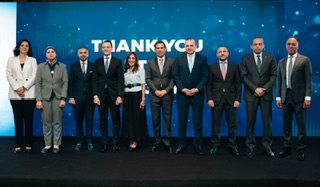
Invest-Gate held its 28th roundtable titled “Powering Real Estate: The New Value Equation,” which took place on Wednesday, June 10, 2026, at the Nile Ritz-Carlton Hotel, ‘Alf Leila We Leila’ Ballroom.
The roundtable brought together senior government officials and executives, real estate developers, and funding institutions alongside experts in energy management and efficiency, renewable energy, and technology providers. They discussed practical approaches to enhancing energy efficiency and management across projects and urban communities, while promoting sustainability and enhancing the current and future value of real estate assets.
The session was moderated by Mr. Amr Elkady, Founder & Managing Director of AKD Advisory, and featured distinguished participants, including: Eng. Khaled Sedeik, Chairman of the Board of Urban Development Fund & Deputy Minister of Housing, Utilities and Urban Communities and head of the Minister’s Office; Dr. Eng. Abdelkhalek Ibrahim, Member of the House of Representatives; Prof. Hend Farouh, Director of Architecture and Housing Research Institute, Housing & Building National Research Center, Head of the Central Unit for Sustainable Cities & Climate Change; Eng. Waleed Mokhtar, CEO of Iwan Developments & General Secretary of the Egyptian Real Estate Council; Eng. Tamer Nasser, CEO of City Edge Developments; Eng. Ahmed Amin Massoud, Chairman of Menassat Developments; Eng. Samy Abdel Kader, Managing Director of TAQA Power; and Ms. Mai Ismail, Associate Director, Manufacturing and Services, SEMED, at the European Bank for Reconstruction and Development (EBRD).
Key Recommendations:
First: Legislative and Regulatory Framework
• Incorporate energy requirements, operational efficiency, and infrastructure considerations into the early stages of urban planning and project design to achieve optimal long-term economic and operational efficiency.
• Enact phased legislation through the House of Representatives mandating the implementation of green building and energy-efficiency codes in new buildings, while designating a regulatory authority responsible for monitoring implementation and ensuring compliance.
• Offer land plots with full compliance to sustainability and energy-efficiency standards established as a requirement from the initial offering stage, rather than relying on incentives provided at later stages.
• Conduct periodic semi-annual assessments to evaluate the level of compliance with incentives and energy-efficiency standards, and further develop these measures based on the results.
• Make green building codes and standards, as well as related incentives, digitally accessible through official platforms, through official platforms, to enhance transparency and promote knowledge dissemination.
Second: Incentives and Financing
• Expand the incentives available for green buildings, in line with the approach adopted by the New Urban Communities Authority, including increasing floor area ratios by 10–15%, raising service allocation percentages, and providing flexible payment and financing terms.
• Enhance cooperation between international financial institutions and the Egyptian real estate sector to broaden the availability of sustainability- and energy-efficiency-linked financing opportunities.
• Provide clear financial and funding incentives for developers to reduce the initial capital expenditure (CAPEX) gap associated with green building projects.
Third: Market and Investment
• Incorporate operating and energy costs into real estate asset valuation frameworks and into purchasing, investment, and financing decisions, ensuring a more accurate assessment of the asset’s long-term value.
• Shift from focusing solely on the purchase price of real estate units to adopting the Total Cost of Ownership (TCO) approach, which takes into account energy, operating, and maintenance costs over the entire lifecycle of the asset.
• Support incentives directed toward end users and link them directly to building efficiency, in line with practices adopted in European markets.
• Encourage the wider adoption of green buildings, given their ability to create added value, enhance the attractiveness of real estate assets, and reduce operating costs over the long term.
Fourth: Energy Efficiency and Operations
• Establish clear operational and performance metrics for buildings and urban communities to monitor energy efficiency and resource consumption on a regular basis and drive continuous performance improvement.
• Strengthen and scale successful national and international initiatives aimed at promoting renewable energy and energy efficiency across urban development projects.
• Enhance the adoption of the Energy as a Service (EaaS) model as a flexible solution to reduce capital and operational expenditures.
• Encourage the use of solar energy and other renewable energy sources, particularly given their declining costs, and broaden their application across rooftops, industrial facilities, and urban communities.
• Adopt sustainable design solutions that consider natural ventilation, solar orientation, and wind patterns to reduce operational loads.
• Integrate specialized energy management companies and incorporate energy planning as a core element of project design and development rather than a later-stage consideration.
Fifth: Awareness, Knowledge, and Capacity Building
• Expand the dissemination of the Green Building Guide and promote its adoption among developers and consulting firms to enhance technical expertise.
• Raise awareness among developers and end-users about the importance of sustainability and its long-term economic benefits.
• Establish a clear rating system for end-users to demonstrate the energy efficiency performance of real estate units.
• Encourage media outlets and professional organizations to support the promotion of green building culture.
• Strengthen technical and advisory training programs to effectively integrate sustainability and energy-efficiency standards throughout the project development cycle.
Sixth: Technology and Innovation
• Foster the use of smart systems and artificial intelligence in energy management and operational data analysis.
• Support the integration of architectural design and energy solutions.
• Enhance energy management solutions in water treatment plants, wastewater facilities, and public utilities to reduce consumption and improve efficiency.
The roundtable was held in collaboration with AKD Advisory and officially sponsored by City Edge Developments, while the gold sponsor was Menassat Developments and Silver sponsor was TAQA Power.
Media Partners included: Aleqaria, Al-Borsa Newspaper, Daily News Egypt, Al-Gedaan Real Estate, Aqarmap, Osoul Misr Magazine, Bloom Gate, Property Plus, Aqargate, and Iskan Misr.